Harkhamer is a practice.
Not an agency. Not a software company. Not an AI consultancy. A practice devoted to helping owners see their businesses clearly and steward them well.
Alignment is the work.
Businesses become unhealthy when things that belong together drift apart.
- Purpose and leadership
- Responsibility and authority
- Information and decisions
- People and their work
- Growth and capacity
- Technology and reality
Harkhamer helps owners see those separations and bring the pieces back into relationship.
Ownership is stewardship.
A business isn’t merely an asset. It’s a network of responsibilities. People depend on it. Families depend on it. Customers trust it. History lives inside it.
For many owners, the business is also bound up with a deeper sense of vocation. Harkhamer takes that seriously.
I won’t pretend the philosophy came from nowhere.
Harkhamer’s understanding of stewardship, calling, truth, dignity, and restoration is deeply shaped by Christian faith. That does not mean clients need to share that faith.
I believe people possess dignity beyond their productivity. I believe leadership is stewardship rather than possession. I believe truth is a prerequisite for restoration. And I believe work can carry meaning beyond money.
Those convictions shape how I enter a business, and how I treat the people inside it.
I’m Christian Amondson.
I’ve spent much of my adult life building businesses, helping build other people’s, studying how people make meaning, and assembling a fairly impressive collection of mistakes. Some of those businesses succeeded. Some didn’t. Both taught me things I use now.
For a long time the parts of my life looked unrelated — business ownership, publishing, the humanities, marketing, systems thinking, and, more recently, building software with AI. What I slowly learned is that they were the same skill wearing different clothes: entering a complicated situation, listening to a lot of people and information at once, and finding the pattern underneath.
I’m particularly good at helping an owner see something they couldn’t quite see from inside the business. Harkhamer is where those threads finally came together.
I don’t have a team of junior consultants. If you hire Harkhamer, you get me. That’s intentional.
The name came before the business made sense.
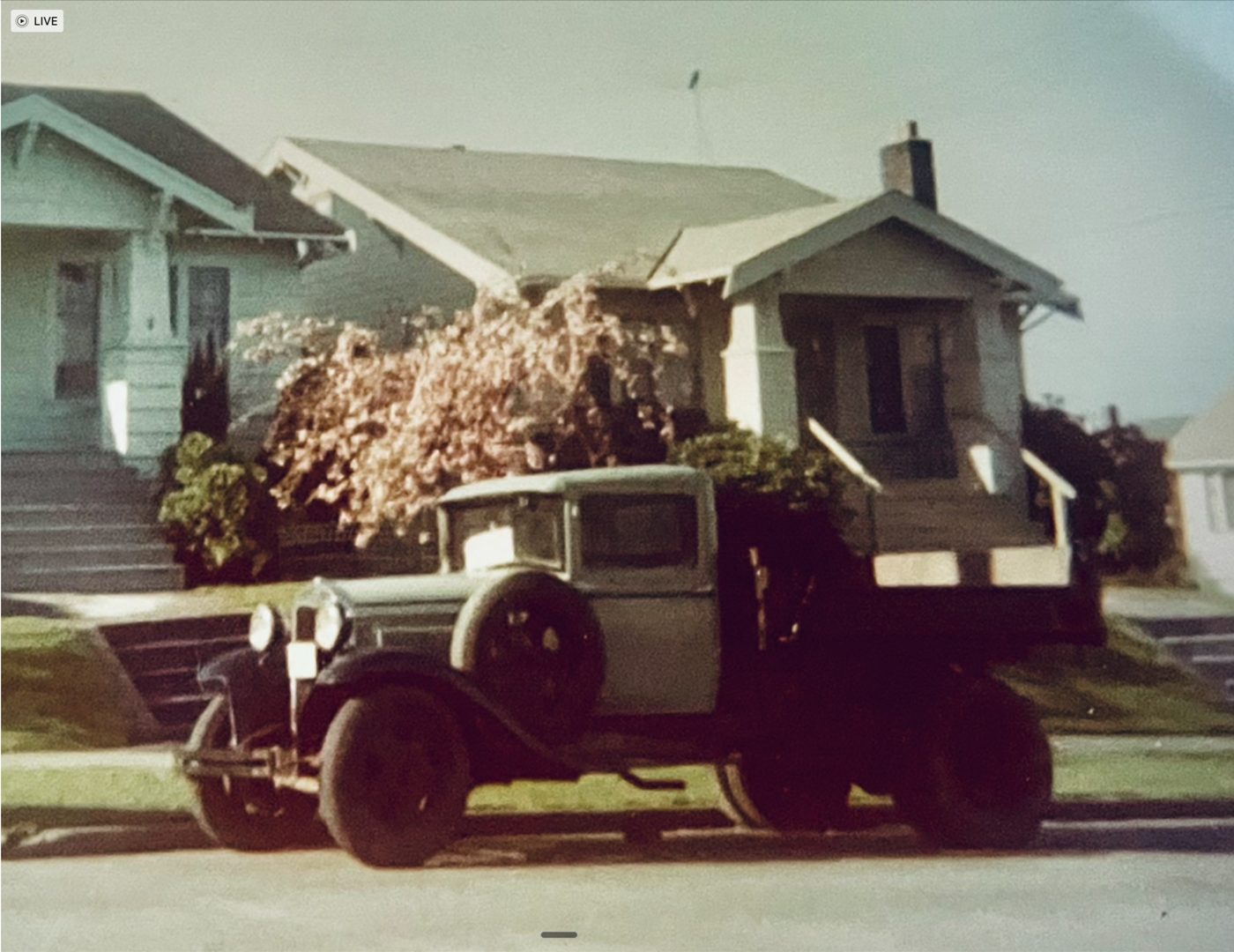
My grandfather, Donald Clausen, loved tools, boats, diesel engines, the fire service, building things, and people. One piece of family lore I grew up with was that old flatbed truck — he called it Herkimer.
Years later, while trying to name this practice, the word kept coming back. Following it led somewhere more meaningful than a truck: toward the craft traditions of the Danish-German borderlands tied to his family, and toward a name that evokes tools, makers, and people who build useful things.
What we know · what is tradition · what it has come to mean
Historically, Donald was real, the truck was real, and the family’s roots in that borderland craft culture are documented.
By tradition, the name “Herkimer,” its spelling, and the stories around it are family lore — carried, retold, and softened by time. I won’t pretend to more certainty than that.
What Harkhamer has come to mean is a choice: to carry something of him — the tools, the craft, the care for people — into this work. That distinction matters. A practice obsessed with truth should be honest about its own name.

Leave more life behind.
A bee enters an ecosystem, does the work it was made to do, and leaves the place more alive than it found it. Pollination is almost incidental to the bee — and it is the whole point for everything around it.
That’s the aspiration for this work, and I’d rather not explain it much further than that. Some symbols do more when they’re left a little mysterious.